Category: Uncategorized
-
The Small Muscles Doing Big Work: Why Foot Strength Matters
When people think about strength training, the feet rarely make the list. Quads, glutes, core, shoulders, but tucked inside each foot is a group of small, often-overlooked muscles doing far more work than they get credit for, and neglecting them can quietly undermine everything built on top of them. These are the intrinsic foot muscles…
-
Do You Really Need Recovery Gadgets? What New Research Says About Athletic Recovery
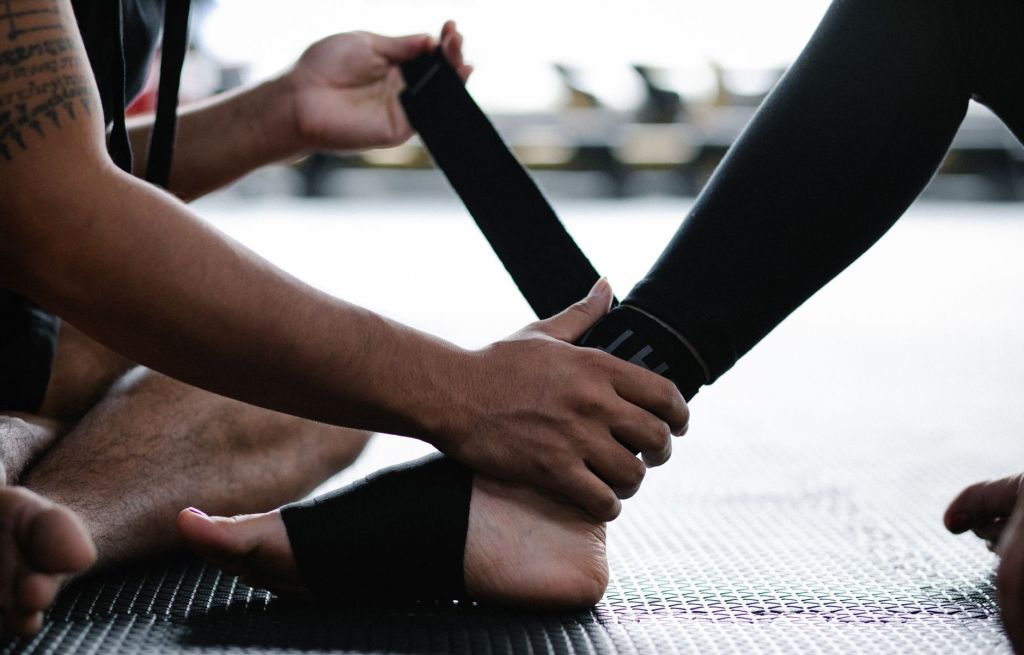
After a hard workout or long run, it’s easy to feel like you need something extra to recover. Compression boots, massage guns, ice baths, and recovery sleeves all promise to help you bounce back faster. But how much do these tools actually improve recovery? A systematic review published in Frontiers in Sports and Active Living…
-

Zone 2 Running and Mitochondria: How Easy Miles Build Endurance
What allows one runner to maintain a steady pace for miles while another begins to struggle after only a short distance? There are many factors involved, including training history, running economy, muscle strength, and pacing. One important piece of the puzzle is the body’s ability to produce energy aerobically. That brings us to mitochondria. Often…
-

Zone 2 Cardio and Your Heart: What Happens When You Train Consistently?
When you finish an easy run, you might not feel as though you’ve accomplished much. Your pace was comfortable, your breathing was controlled, and you weren’t pushing your limits. But the value of aerobic exercise isn’t always measured by how exhausted you feel afterward. Consistent aerobic training can improve cardiorespiratory fitness and support long-term cardiovascular…
-

The Power of Easy Running: Why Every Run Shouldn’t Be Hard
If every run leaves you exhausted, you may be working harder than you need to. It’s tempting to believe that a productive run has to be fast, uncomfortable, or physically demanding. We often measure progress by pace, distance, or how hard we pushed ourselves. But one of the most important skills a runner can develop…
-
The Comeback Plan: How to Start Exercising Again After an Injury
Part 4 — Return to What Matters At some point, rehab stops being the point. You didn’t do all this work just to move well in a gym or follow a plan. You did it to get back to something, a run, a lift, a job that demands physical work, a hike, a pickup game,…
-
The Comeback Plan: How to Start Exercising Again After an Injury
Part 3 — Build Your Capacity: Stronger, Longer, Better Once movement feels normal again, a new question takes over. Not “can I move without pain,” but “how much can I actually handle.” This is the phase where you start rebuilding real strength and endurance, and it’s also where people either stall out from being too…
-
The Comeback Plan: How to Start Exercising Again After an Injury
Part 2 — Rebuild Movement Before You Chase Performance Once you’ve found your starting point, there’s a strong pull to skip ahead. You know your baseline now, so the instinct is to start pushing against it right away, adding weight, adding miles, adding intensity. But there’s a step in between knowing where you are and…
-
The Comeback Plan: How to Start Exercising Again After an Injury
Part 1 — Start Where You Are: Stop Waiting to Feel 100% You’ve probably told yourself some version of this: “I’ll start working out again once I’m fully healed.” It sounds responsible. Patient, even. But for most people, that day never quite arrives, because 100% isn’t a finish line you cross. It’s a moving target…
-
Caffeine and PTSD — What Veterans Need to Know Before Their Next Cup
This is the post I think matters most in this series, because most fitness content treats caffeine like a simple performance boost. For a lot of veterans, it’s more complicated than that — and the research backs that up. The performance case for caffeine Caffeine has real, well-documented benefits for sleep-deprived performance. Research on military…

